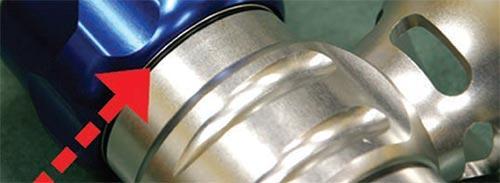
What’s an intercooler
An intercooler is an intake air cooling device used commonly on turbocharged and supercharged engines. Intercooler cools the air compressed by the turbo/supercharger reducing its temperature andf increasing the density of the air supplied to the engine.
As the air is compressed by a turbo/supercharger it gets very hot, very quickly. As its temperature climbs, its oxygen content (density) drops, so by cooling the air, an intercooler provides a denser, more oxygen rich air to the engine thus improving the combustion by allowing more fuel to be burned. It also increases reliability as it provides a more consistent temperature of intake air to the engine which allows the air fuel ratio of the engine to remain at a safe level.
There are two types of intercoolers; Air-to-Air and Air-to-Water. An Air-to-Air intercooler extracts heat from the compressed air by passing it through its network of tubes with cooling fins. As the compressed air is pushed through the intercooler it transfers the heat to the tubes and, in turn to the cooling fins.
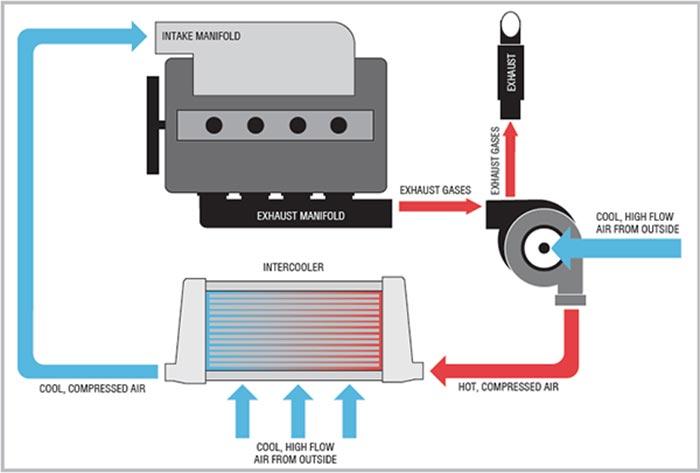
Air-to-Air Intercooler
The cool air from outside, traveling at speed, absorbs the heat from the cooling fins reducing the temperature of the compressed air. This system’s advantages are simplicity, lower cost and light weight.These factors make it by far the most common form of intercooling. The down sides can be a longer intake length (as the intercooler is usually at the front of the car) and more variation in temperature than the Air-to-Water type.
An Air-to-Water intercooler uses water as a heat transfer agent. In this setup cool water is pumped through the air/water intercooler, extracting heat from the compressed air as it passes through. The heated water is then pumped through another cooling circuit (usually a dedicated radiator) while the cooled compressed air is pushed into the engine.
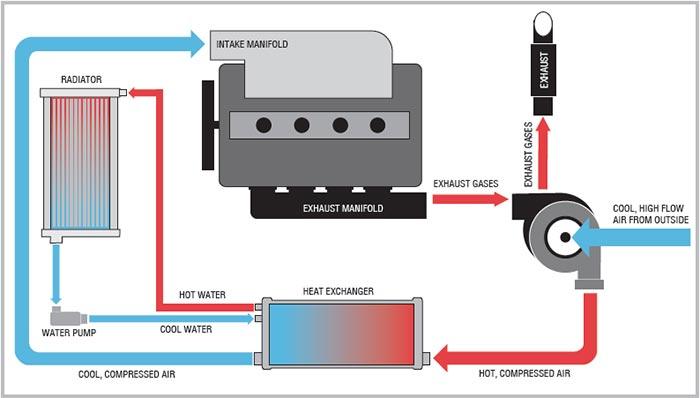
Air-to-Water Intercooler
These intercoolers (also known as heat exchangers) tend to be smaller than their Air-to-Air counterparts making them well suited to difficult installations where space, airflow and intake length are an issue. Water is more efficient at heat transfer than air and has more stability so it can handle a wider range of temperatures. On the downside the Air-to-Water system is complex, heavy and has the added cost of a radiator, a pump, water and transfer lines. Common applications for these are industrial machinery, marine and custom installs that don’t allow the easy fitment of a air to air, such as a rear engined vehicle.
The best placement for an air to air is in the at the front of the vehicle. When the engine layout, or type of the vehicle do not permit the “front-mount” placement, an intercooler can be mounted on top of the engine, or even on its side. The Air-to-Water system can be mounted anywhere in the engine bay, as long as the radiator is mounted in a position with a good airflow, and/or with a thermo fan attached to it.
What should I look for when buying a Fuel Pressure Regulator?
Ratio – This is the ratio between boost pressure and fuel pressure increase. A 1:1 ratio means that for every 1 PSI increase in boost pressure, Fuel pressure will also increase by 1 PSI to ensure that the pressure differential between the inlet and outlet of the injector is constant. All injectors are rated to certain base pressure. Injectors are solenoid valves which open and close when power is applied to them.
The injector has a solenoid which provides enough force to pull open the valve in the injector to overcome the fuel pressure keeping the injector closed. If the fuel pressure is too high, the solenoid will not have enough energy to open the valve fully causing the engine to starve of fuel. It is essential to maintain a constant pressure differential between the inlet and outlet of the injector and hence why a 1:1 ratio FPR is ideal. All
Turbosmart FPR’s feature a 1:1 rising rate.
Flow capabilities – Electric fuel pumps are designed to flow a constant amount of fuel regardless of engine RPM and/or boost pressure. At idle, the fuel regulator needs to flow the maximum amount of fuel as the fuel pump is at maximum flow, but the engine is using minimal fuel. If the FPR is not capable of flowing enough fuel, the fuel pressure will be above what is desired.
A high flowing FPR is extremely critical on a high horsepower car running a mechanical fuel pump. Mechanical fuel pumps are driven directly by the engine. Fuel flow increases as the engine RPM increases. In a situation such as the end of a drag race, engine RPM is high but the throttle is closed and the engine is consuming minimal fuel.
The FPR needs to be capable of diverting high amounts of fuel so that in situations like this, the fuel pressure differential between the inlet and outlet of the injector is optimal. Large pressure spikes from an FPR not flowing enough fuel can result in damaged injectors or mechanical failure to fuel rails and lines.
All Turbosmart FPR’s are designed for high flow and are capable of supporting a fuel system rated to the model of FPR.
Materials – Today’s fuels have a variety of chemicals to increase its octane rating. The higher the octane rating, the less susceptible it is to engine knock. Fuels such as alcohols and unleaded race fuels can corrode untreated metals and destroy diaphragms.
All Turbosmart FPR’s use anodized billet aluminium bodies for strength and corrosion resistance. The FPR800 uses a diaphragm that can withstand any type of pump fuel whereas the FPR1200, FPR2000 and FPR3000 have diaphragms which can handle any type of race fuel or alcohol.
Base Pressure – All injectors have a recommend optimal working base pressure from the manufacturer and the FPR needs to be adjusted to provide this optimal base pressure. Turbosmart FPR’s have adjustments screws that allow the user to set the base pressure between 30 – 70 PSI, allowing them to be matched to any type of fuel injector and fuel pump.
What’s the difference between a turbocharger and a supercharger?
Both turbocharging and supercharging are force induction systems – that is they force the air into the engine at a much higher pressure than the naturally aspirated systems.
Forcing more air into the combustion chamber allows the engine to burn more fuel during its power stroke and consequently produce more energy. Both superchargers and turbochargers therefore have the same goal – producing more power, the difference lies in how they go about it.
The biggest and the most obvious difference between the two systems is where they derive their power from. Superchargers are powered by the engine’s crankshaft while turbochargers get their power from the engine’s exhaust gases. Supercharges draw power from the crankshaft via a chain, gear or bell and pulley system.
Because turbochargers are using exhaust gases expelled by the engine they do not need to use any of the engine’s existing power to operate. This is in a stark contrast to superchargers that use a portion of the engine’s power output to perform their duties.
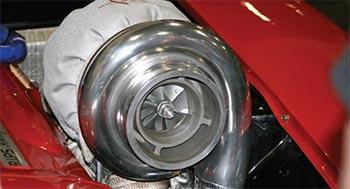

A typical turbocharger configuration A typical supercharger configuration
There are two main types of superchargers: a centrifugal type and a positivide displacement (Roots or Lysholm Screw) type. A centrifugal type supercharger is very similar to a turbocharger with the notable exception of being connected to a crank via a belt and pulley system. The air is drawn into the supercharger, compressed via an impeller and discharged into the engine’s intake.
Very similar in its internal construction to a turbocharger, a centrifugal supercharger is considered to be the most efficient of all superchargers.
Roots supercharger (named after its inventors – the Roots brothers) produces its boost via a pair of overlapping lobes that force the air down into the intake.
Twin Screw supercharger works by pulling air through a set of counter rotating, high tolerance screws.
In the case of a Roots or Lysholm Screw (aka Twin Screw) type supercharger the compression is done via a counter-rotating rotors (Roots type) or twin rotating screws (Twin Screw type). The faster the crank speed – the more boost is produced. The biggest advantage of superchargers is that they produce a very linear boost, all the way from a very low RPM.
A turbocharger consists of two halves: The compressor and the turbine. The exhaust gases spin the turbine, which is connected via a common shaft to the compressor. The compressor then forces air into the engine. Because the operating speeds of a turbocharger can be up to 10 times those of a supercharger it can produce more boost in a shorter time.
Anyone interested in turbos would have heard of the dreaded “turbo lag”. Because turbos derive their operating power from exhaust gases, before it starts generating boost the turbine must first spool up. The delay between the turbine’s idle speed and its full throttle speed is called a “turbo lag”. Over the last decade the advances in turbo technology have all but eliminated the “turbo lag” and it’s not that much of an issue nowadays.
In contrast, a supercharger, being connected directly to the crank, produces boost almost immediately, even at very low RPM. This is especially evident on a roots and screw-type superchargers.
What superchargers gain in their boost delivery department however, they lose when it comes to efficiency. While turbochargers do create some additional exhaust backpressure and interrupt the exhaust flow, they do not drain any power away from the engine itself. Their main source of operating power comes from exhaust gases that are already being expelled by the engine.
This makes turbochargers much more efficient in creating boost than superchargers that rely on the engine’s crank to provide them with operating power with the demand for power growing along with the amount of boost being created.
Another area in which the turbochargers have a distinct advantage is flexibility. Using various add-ons like wastegates and boost controllers, a turbo can be tuned to produce a specific amount of boost at any given time. Boost levels can be specified by gear, time or a simple push of a button, all in real time.
In contrast, to change the boost rating of a supercharger its pulley system needs to be changed. This requires time and obviously cannot be done while operating.
In the area of reliability superchargers have been, until recently, considered superior. With the advent of new technology and new, exotic materials, turbochargers have forged ahead into many motorsport areas traditionally dominated by superchargers.
Although they are more complex in nature and require more modifications to the engine, turbo systems are also capable of much higher boost and therefore extracting a much higher peak power than superchargers.
Turbochargers are lighter, smaller and more tuner-friendly. If you size them properly you can successfully turbocharge just about anything from small capacity imports to big capacity domestics and diesels. There are many Turbo Kit manufacturers that offer bolt-on kits to suit specific makes and models making turbocharging your car easier than ever.
On the other hand, there are still many people who will prefer the immediate response and ease of operation of a supercharger so your choice will really come down to what suits your application better and which system will better address your needs.
Forced Induction 101
An engine produces power by igniting fuel and air inside a chamber. As the fuel and air are ignited, the pressure within the chamber increases, applying a force onto a piston or rotor. The generated force is applied on a crank shaft which causes rotation. How much power generated is mainly determined by how much fuel and air is ignited inside the chamber to produce the driving force.
There are two types of induction systems for combustion engines; naturally aspirated and force-fed (forced induction) engines.
Naturally aspirated (N/A) engines draw in air for combustion under atmospheric conditions. As the piston moves down, the intake valve opens allowing the piston to suck air into the chamber. How well the chamber is filled is called its volumetric efficiency.
A volumetric efficiency of 100% means that the chamber is completely filled with air compared to the chamber at static conditions. The volumetric efficiency of a naturally aspirated engine can never be higher than 100% the engine cannot fill the chamber more than under static conditions due to the air pressure being the same. Its ability to fill the chamber is also greatly affected by how long the intake valve is open for and how fast the engine is rotating.
Forced induction engines use a pump to increase the air pressure entering the engine and therefore increasing its volumetric efficiency. Higher air intake volume allows for more fuel to be burnt which increases the amount of power generated by the engine.
There are 2 different types of pumps in forced induction systems; a turbocharger and a supercharger.
A small engine equipped with a turbocharger or supercharger has the ability of produce the same amount of power as a large capacity engine without the associated fuel consumption. For example, a turbocharged 2.0L engine at low RPM off boost will consume similar amounts of fuel to a Naturally aspirated 2.0L engine. A large 6.0L engine even at low RPM will consume more fuel than the 2.0L engine but when the 2.0L engine is on boost, then the power generated can be the same as the 6.0L engine which means the fuel consumption will be similar. The fuel saving is when the smaller engine is off boost, it performs like a small engine and consumes fuel like a small engine but when it is on boost, then it performs like a large engine.
Another benefit of a forced induction engine is the ability to increase its performance. To improve the performance of a N/A engine, its volumetric efficiency needs to be increased as this is what allows more air to be ingested by the engine to create more power. Increasing the maximum RPM will also increase its performance.
To increase its volumetric efficiency requires changes to cam shafts, inlet tracts, exhaust systems etc. The increase in power will only be marginal as most engines are fairly efficient from factory. In terms of ease and performance compared to cost, a forced induction engine is best.
The performance of a turbocharged engine can be increased greatly just by increasing the boost or controlling where maximum boost is reached. Simple modifications such as larger exhaust systems and free flowing air filters can yield large power increases compared to doing the same modification to a N/A engine.
Turbosmart performance products are designed to maximize any turbocharged engine at any level of modification.
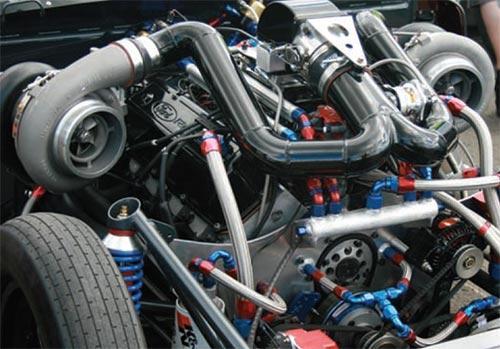
A vast majority of product-related problems are due to incorrect fitting or setup.Turbosmart recommends that you get your products fitted and tuned by a qualified technician. If you choose to fit and set the product up yourself, ensure you have all the necessary tools and technical knowledge required to perform this task.
I’m experiencing excessive/fluctuating boost with the Boost Tee.
(The following answers also apply to Dual Stage Boost Controllers)
- Check that the boost controller is installed so that the arrow points toward the wastegate actuator.
- Check the joining hoses for splits, cracks or loose connection and are the correct size for the application
- Check to see if the boost controller is blocked or contaminated with dirt or debris
The excessive/fluctuating boost is still occuring…
- Ensure that there is nothing but the boost controller in the hose between the pressure source and the wastegate actuator, ie tee pieces for boost gauge or to factory boost solenoid.
The excessive/fluctuating boost is still occuring…
- Pressure test the wastegate actuator for leakage, the diaphragm or housing may be cracked or split
- Check that the wastegate is operating correctly
Can I install a Fuel Pressure Regulator myself?
While a fuel pressure regulator can be fitted relatively easily, Turbosmart recommends its FPRs are fitted and tuned by a qualified technicians as an incorrect setting of fuel pressure may cause your engine to run lean with the potential for detonation.
NOTE: After fitting as FPR, Air-Fuel ratios must be checked.
How do I adjust the base pressure on the FPR?
Turning the screw clockwise will increase your base pressure and anti-clockwise will decrease base pressure. Ensure that when setting the base pressure the vacuum hose is disconnected and blocked and that the reference nipple is open to atmosphere.
I’ve installed an atmospheric BOV and now my engine is dipping below normal idle and stalling.
- Check the vacuum hose for splits, cracks, loose connection, kinking or any obstruction – old or fatigued hose may collapse under vacuum causing an obstruction
- With the engine running remove the vacuum / pressure hose from the nipple in the cap of the BOV, there should a loud hissing sound. The engine should idle poorly, double check by covering the end of the hose with your finger. If this does not occur, the hose could be blocked or crimped. Check the hose and replace if necessary.
If the stalling dipping idle is still occurring…
- Ensure that the vacuum/pressure source is not shared and that the vacuum source is directly from the inlet manifold
- Check the seal between the adapter and the Race Port – ensure that there is no gap between the BOV base and the weld flange
- Check the join between the adapter and the intercooler pipe for leaking.
NOTE: Some cars with sensitive Air Flow Meters will not respond well to atmospheric Blow-Off Valve. Turbosmart recommends fitting a bypass-type BOV like the Plumb Back. Fitting a bypass-type BOV will eliminate the stalling problem.
The dials on my FCD2 do not go all the way around.
The adjustment dials do not turn 360o, they start at 1 and finish at 10. Do not force them past these points as this will damage your FCD2.
I’ve accidentally zero’d all the dials, what are the factory settings on the FCD2?
Before setup the unit should be set to the following settings, Clamp=10, Release=10.
What is a compressor surge or “flutter”?
Compressor surge is a phenomenon where the compressor cannot increase the pressure of the air it is pushing and results in the reversal flow of air through the compressor.
The fluttering noise is the sound of the compressor “chopping” through the air ratherthan pushing the air. The most common time which compressor surge occurs is during gear changes on a manual transmission car. Under acceleration, the turbocharger is flowing air and the engine is ingesting the air which means the air that the turbocharger is pushing is going somewhere at a certain pressure. When a gear change occurs, the throttle which allows air to flow into the engine is closed.
This results in a large pressure spike as the turbocharger is still trying to flow air due to the inertia of the compressor and turbine but there is nowhere for the air to go as the throttle is closed. The pressure within the intercooler piping continues to increase until the compressor reaches its pressure limit. When it reaches this limit, it cannot flow the air any more and the built up air pressure inside the intercooler and pipe begins to flow backwards through the compressor which is trying to flow air forwards.
The result of this reversal flow of air is the immediate deceleration of the turbocharger and a high load on the bearings which support the compressor/turbine shaft. At low turbo speeds and low pressures, the deceleration of the turbo and the load on the bearings is low, i.e. a small amount of fluttering at low engine speeds and throttle movements is negligible.
At high turbo speeds and high pressures, compressor surge during a gear change can be damaging to the bearings of the turbocharger as the deceleration rate of the turbocharger is high and the reversal airflow through the compressor is high.
This deceleration will also reduce the boost response of the turbocharger when the throttle is reopened as the engine will need to work harder to increase the turbo speed back up to operating RPM.
A Turbosmart BOV is designed to maximize boost response and eliminate the problems associated with compressor surge. During a gear change the BOV will open up due to vacuum and boost pressure. This will vent the excess pressure build up and allow the turbocharger to continue to flow air.
This will also reduce the deceleration of the turbocharger as the turbo does not need to work against a closed throttle. Flow is another important specification of a BOV. If the BOV cannot flow enough air, the pressure increase in the intercooler piping when the throttle is closed can still be high enough to cause compressor surge.
All Turbosmart BOVs are designed for maximum flow and can flow enough air to eliminate compressor surge.
How do I adjust my Turbosmart BOV?
Each Blow-Off Valve (BOV) or Bypass Valve (BPV) needs to be adjusted to suit the vehicle it is being mounted on. The aim of the adjustment on Vee Ports, Supersonics and Dual Ports is to make sure that the piston is hard closed at idle and that the piston closes fast enough to minimise backfiring and not stall the engine. Plumb back BOVs are equipped with a spring which are designed to keep the piston open at engine idle and hence the cap can be left in the middle position.
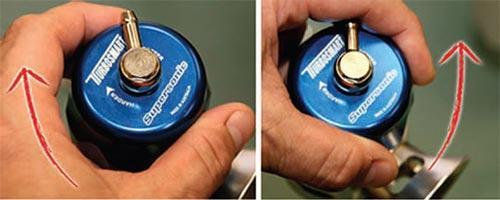
Adjustment to the BOV is made by rotating the cap. To increase the spring force on the piston, rotate the cap clockwise in the direction of hard as marked on the top of the cap. To decrease the spring force on the piston, rotate the cap anticlockwise in the direction of soft as marked on the top of the cap.
CAUTION – Do not rotate the cap beyond the first O-Ring indicator groove
- Start with the BOV cap at the maximum soft position (The indicator O-Ring should be completely covered by the edge of the cap)
- With the engine at idle the exhaust port should be closed off by the piston – the piston should be hard against the seat and not floating or moving
- Free rev the engine and back off quickly, the engine should return to normal idle speed – if the engine drops below idle or stalls increase the spring tension by one turn
- Repeat this process until the engine free revs and returns to normal idle speed
- Test drive the car and ensure that when decelerating or changing gears that the engine has minimal backfiring and no stalling. If backfiring is excessive or stalling is noticed then check all connections made during the installation, otherwise increase the spring tension